26 Oct 2026 · Delivery · All pharmacies · Owner, team
Getting medicines delivered in France: the guide
With or without a prescription: what the law allows, how to find a pharmacy that delivers, what delivery costs, and what to check.
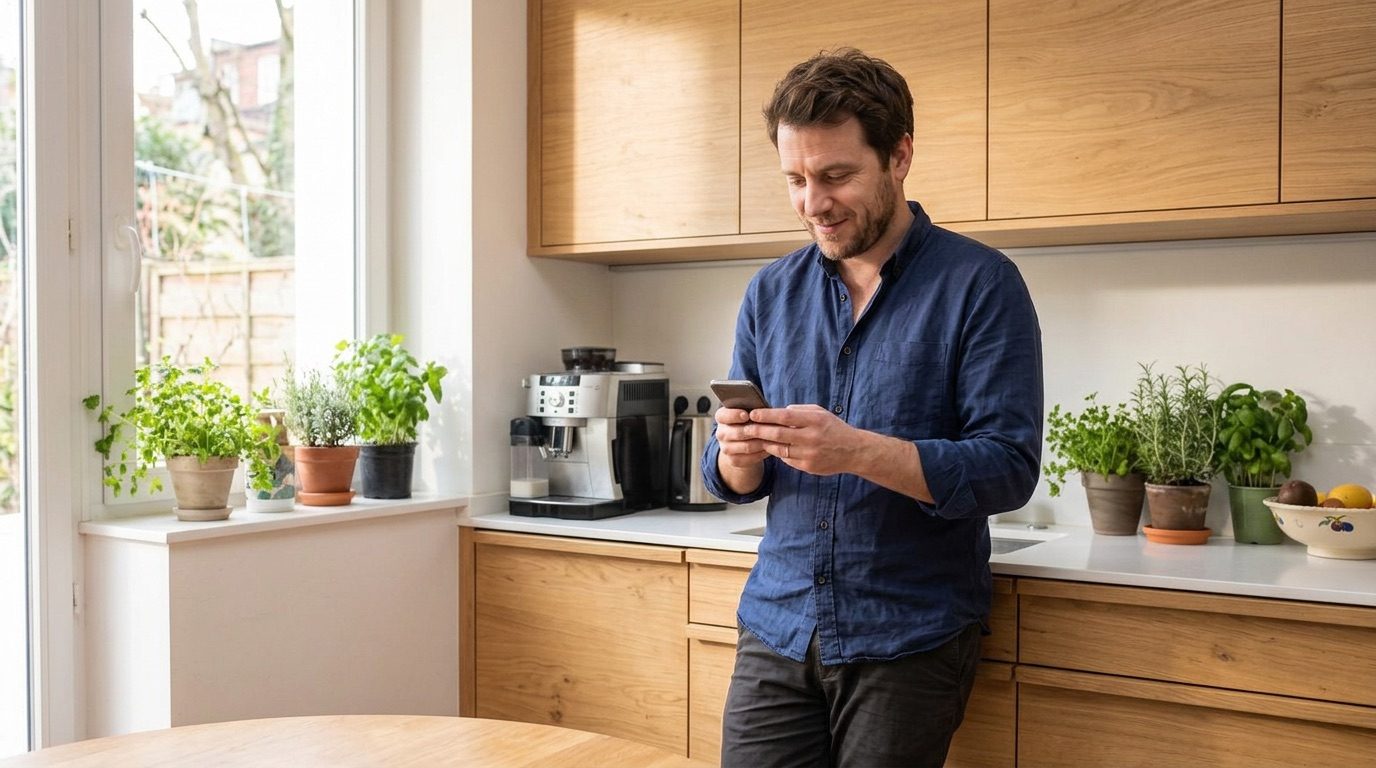
In France, medicines are not delivered like an ordinary parcel. They always go through a community pharmacy, and it is a pharmacist who dispenses them, even when a courier brings them. Home delivery does exist, however, and it is regulated: by the French Public Health Code (Code de la santé publique) and by the rules of the French National Order of Pharmacists (Ordre national des pharmaciens). This guide explains what is possible depending on whether there is a prescription, how to find a pharmacy that delivers, and what to check at the door.
1. Two very different cases
It all depends on the status of the medicine:
- Medicines that do not require a prescription (known as “optional prescription” medicines) and parapharmacy products can be ordered online, on the website of an authorised pharmacy, then delivered or collected at the counter.
- Prescription medicines are not sold online. The law reserves distance selling for “only medicines that are not subject to compulsory prescription” (article L. 5125-34 of the Public Health Code). They can, however, be delivered by the pharmacy that dispenses them, within a precise framework, described below.
Confusing the two is the main source of error: a prescription treatment always goes through a pharmacy chosen by the patient, and through a pharmacist who checks the prescription before dispensing.
2. Without a prescription: ordering from a pharmacy’s website
A website selling medicines online can only be opened by the owner pharmacist of a pharmacy, after a declaration to the regional health agency (ARS). The website is therefore an extension of a real pharmacy, with an address and a responsible pharmacist.
The process is simple:
- The patient chooses their products on the pharmacy’s website.
- They choose between home delivery and counter pickup: the law requires offering both.
- The pharmacy prepares the order. The pharmacist may ask questions before validating, as they would at the counter.
- The order is delivered, by a carrier or a courier, under the pharmacist’s responsibility.
3. With a prescription: what the law allows
A prescribed medicine can perfectly well arrive at the patient’s home. Three situations are provided for.
Delivery by the pharmacy. The pharmacy dispenses the prescription, then has the medicines brought to the patient. The rules are precise (articles R. 5125-47 to R. 5125-49):
- the package is named, individual, opaque and sealed, and its closure lets the patient check that it has not been opened;
- it bears the patient’s name and address;
- it is handed over directly to the patient, “without intermediate storage”, under conditions that guarantee the medicines are kept properly;
- the pharmacist makes sure the patient receives all the useful explanations.
The pharmacy says how to get the prescription to it. In all cases, the pharmacist checks it before any dispensing: it is the pharmacist, not the delivery person, who dispenses the treatment.
A relative who goes to the pharmacy. A family member, a neighbour or a carer can present the prescription at the pharmacy and bring the medicines back. This is often the simplest solution for a one-off treatment.
Dispensing at home. When the patient is “unable to travel”, because of their health, age or geographical situation (article R. 5125-50), dispensing can take place at their home. It is carried out by a pharmacist of the pharmacy, or by a pharmacy technician to whom the pharmacist personally gives the instructions on the treatment (article R. 5125-51).
In all three cases, the patient remains free to choose their pharmacy: this is a rule of pharmacists’ professional ethics (article R. 4235-21).
4. Finding a pharmacy that delivers
The most direct way is still to ask one’s usual pharmacy: many already deliver, with their own delivery person or a courier, without always advertising it. The question to ask comes down to three points: how far the pharmacy delivers, within what time, and at what price.
A pharmacy that has opened a website or an app usually states it on its page: delivery areas, time slots, option to collect at the counter. On Nexum Pharma, each pharmacy has its own page, with its services; the list of cities where at least one pharmacy delivers is on the page Medicine delivery, city by city, and the service is described from the patient’s side on nexumpharma.fr.
5. What delivery costs
Delivery fees are set by the pharmacy or by the service that delivers for it: there is no national rate. They depend on the distance, the lead time and sometimes the order amount. They must be stated before the order, and the pharmacy may choose to cover them.
The price of the medicines does not change with delivery: a reimbursable medicine dispensed on prescription follows the same reimbursement rules as at the counter.
6. At handover: what to check
A few seconds are enough, at the door:
- the package is closed and intact, and it is in their name;
- the medicines match the prescription or the order;
- if an explanation about taking a treatment is missing, the question goes to the pharmacist, by phone or at the pharmacy, never to the delivery person, who only carries the package.
Some pharmacies ask for proof of handover: a code received by SMS or a QR code to show to the courier. This is the case for pharmacies that deliver with Nexum, where delivery is tracked live until handover.
7. Websites to avoid
Medicines sold outside the official circuit may be falsified. Before ordering, two checks:
- every sales page of an authorised website displays the common European logo for online sale of medicines, with a link to the Order’s website and to that of the ministry responsible for health;
- the French National Order of Pharmacists publishes the list of authorised websites, each attached to a French pharmacy: a website absent from this list is not authorised.
A website that sells without a prescription a medicine that requires one, or that names no pharmacy and no responsible pharmacist, is to be avoided.
8. With Nexum: how delivery is organised
At a pharmacy equipped with Nexum, delivery starts from the pharmacy and stays attached to it from start to finish:
- The order arrives. The patient orders on the pharmacy’s website or app, Nexum Pharma, or by phone, through the pharmacy’s voice assistant (Standard vocal). They choose delivery or counter pickup.
- The pharmacist checks. The team prepares the order; the pharmacist validates it, prescription included if there is one. Nothing leaves before that.
- The package is sealed at the pharmacy, in an opaque bag, in the patient’s name.
- The courier leaves as soon as the order is ready: the pharmacy’s own delivery person if it has one, otherwise a Nexum courier.
- The delivery is tracked live. The patient receives an SMS with the tracking link; handover is made against a QR code or a PIN code, and the proof is kept by the pharmacy.
Delivering fast, thanks to a delivery fleet. Nexum relies on a network of professional couriers, reinforced in July 2026 by the takeover of LivMed’s, the medicine delivery service in Nice, and on its partnerships with Uber Eats and Uber. The pharmacy has no delivery person to recruit and no vehicle to manage: it requests a delivery, the quote is shown before validation, and a courier comes to pick up the package. A pharmacy that already has its own delivery person keeps them, and manages them in the same place. This network serves the pharmacies equipped by Nexum: more than 400 in France (Nexum reference presentation, 1 July 2026).
Frequently asked questions
▶ Is a pharmacy allowed to deliver medicines?
Yes. A pharmacy can deliver the medicines it dispenses, including on prescription, in a named, opaque and sealed package handed over directly to the patient. Medicines without a prescription can also be ordered on the pharmacy’s website.
▶ Can prescription medicines be delivered?
Yes, by the pharmacy that dispenses the prescription, or through dispensing at home when the patient cannot travel. However, a prescription medicine cannot be bought on an online selling website.
▶ Where can medicines without a prescription be delivered from?
From the website of an authorised pharmacy: it displays the common European logo and appears on the list published by the French National Order of Pharmacists. The patient chooses delivery or counter pickup.
▶ How much does home delivery of medicines cost?
There is no national rate: the fees are set by the pharmacy or the service that delivers for it, and stated before the order. The price of the medicines does not change.
▶ Can a relative receive the package?
A relative can collect the medicines at the pharmacy with the prescription. For a delivery, the law provides for direct handover to the patient, without intermediate storage: if the patient cannot be present, the pharmacy says how to organise the handover.
Sources: French Public Health Code, articles L. 5125-25, L. 5125-34, R. 4235-21, R. 5125-47 to R. 5125-52; French National Order of Pharmacists, professional sheets "Dispensing and home delivery of medicines" and "The online sale of medicines for human use", consulted on 26 October 2026. This guide describes a general framework; it does not replace the pharmacist’s advice.
Let's see what Nexum would change in the pharmacy
A demonstration led by a pharmacist from the team, on the pharmacy's own call and order flows.