23 Oct 2026 · Telephone · All pharmacies · Owner
Phone hold time pharmacy: how to reduce it
Where phone hold time comes from, what it costs, the usual levers, and what changes with a voice assistant that picks up on the first ring.
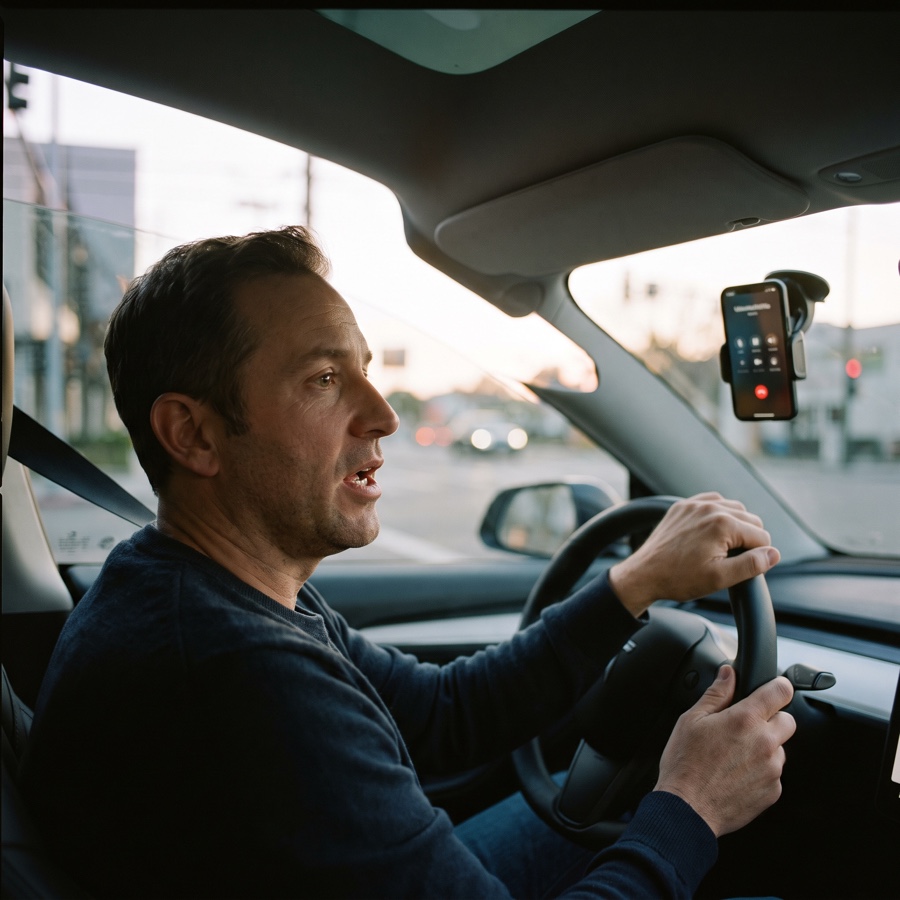
Phone hold time has two faces. On the patient side, music and a voice repeating that the call is important. On the counter side, a ring that interrupts a dispensing, a technician who picks up while apologising to the person in front. Nobody wins, and almost no pharmacy measures what it costs. This article breaks the wait down, puts figures on it with visible assumptions, and compares what pharmacies try to reduce it.
1. Where the wait comes from
A pharmacy receives a few dozen calls a day; the voice assistant calculator starts from 80, with a slider from 20 to 250. Most concern three questions: is a product available, when does the pharmacy close, is an order ready. Three questions whose answer is in the pharmacy management software or in the hours grid, yet which tie up a person at the counter at every ring.
The wait comes from this collision: the call arrives during a dispensing, the team finishes what it is doing, the patient holds. At peak hours, three lines ring at once and a queue forms on both sides of the counter. It is not the call volume that creates the wait, it is that every call, even the simplest, needs the same person as the dispensing.
2. What the wait costs
The voice assistant calculator figures three items with editable default values. With 80 calls a day, 20% of calls missed or abandoned on hold, 30% of those matching a lost sale, a counter basket of €32 and 300 opening days, lost sales on missed calls are written 80 × 0.20 × 0.30 × 32 × 300, that is €46,080 a year. Two cumulated team hours on the phone per day, at a fully loaded technician hourly cost of €18, add €10,800.
The heaviest item is not team time, it is the patient who hangs up. A call abandoned on hold leaves no trace: no message, no reservation, no name. The pharmacy does not know it lost a sale, it only knows the phone rang.
3. Three usual levers, and their limits
- The hold message. Music, a voice inviting people to wait or visit the website. It makes the wait more bearable, it does not shorten it, and it answers no question. Message templates are in the article on the pharmacy phone greeting message.
- A dedicated phone desk. One person who only answers calls. Effective at peak hours, useless the rest of the day, and absent at night, on Sundays and during on-call duty. The cost is a full-time position for questions whose answer is in the software.
- Voicemail out of hours. It avoids ringing into the void, but the request is not taken: the patient who wanted to know whether their treatment was on the shelf calls the next pharmacy.
These three levers share a limit: they manage the wait, they do not remove it, because they do not answer.
4. Picking up on the first ring
The voice assistant takes another route: it picks up at once and handles repetitive calls itself. The patient speaks normally, with no keypad menu. The assistant recognises the requested product, even mispronounced, asks for the dosage and form as a technician would, then reads real stock in the pharmacy’s management software. If in stock, it sets the product aside and confirms by SMS; if out of stock, it suggests an equivalent that is in stock; for a prescription, it sends a link to upload a photo that the pharmacist checks. Hours come from the pharmacy’s grid, not from a recorded message: open, closed or on call, the answer is right on a bank holiday too.
On the Nexum network, over 90% of calls are handled by AI, 24/7, and team time spent on the phone is divided by five (network data, 2026, detailed in the article What the telephone really costs a pharmacy). Since 5 October 2025, the assistant has taken 233,484 calls while pharmacies were at work (as of 17 September 2026, production database). When the patient says “delivery”, an SMS opens nexumpharma.fr with the product already in the basket: three delivery requests out of four end on the web (production database, 12 September 2026).
5. What is left to the team
The assistant guides, the pharmacist decides. No dose, no interaction, no symptom: anything that needs a pharmacist is transferred to the pharmacy team. And that transfer is not one more wait:
- The call arrives with what has already been understood: the requested product, the reason, what the assistant checked.
- The team’s numbers ring in the chosen order ● Available in the app: counter, back office or the owner’s mobile, ringing together or one after the other, with a ring time set by the pharmacy and its own hold audio.
- Out of hours, the transfer switches to voicemail ● Available: the patient can leave a transcribed message, which the team reads at opening.
- If the AI does not understand, it does not guess: it offers to continue on the web by SMS, leave a message, or be transferred. The patient never leaves without a solution.
6. Measuring, before and after
The wait cannot be reduced without measuring it. Before any change, three figures are enough, taken over an ordinary week: the number of calls per day, the share that ring into the void or are abandoned, and the team’s cumulated time on the phone. These are the calculator’s three sliders; the pharmacy’s values replace the defaults.
After go-live, the pharmacy sees every call in the Nexum Pro history, with its reason and outcome: reservation, delivery, message, transfer. Call statistics ● Available in the app give volume by day and by hour, and what was handled without the team. It is on these figures, not on an impression, that the reduction in waiting is judged.
Frequently asked questions
▶ Does the voice assistant put the patient on hold?
No. It picks up on the first ring and handles the call. The only possible wait is a transfer to the team, with the hold audio chosen by the pharmacy and a ring time it sets itself.
▶ What happens to a call the AI does not understand?
If the product is not recognised after confirmation, the assistant offers to switch to the web by SMS, leave a transcribed message for the team, or be transferred. The pharmacy sees the call in its history.
▶ Does the pharmacy need to change carrier or number?
No. The pharmacy keeps its number and carrier, and forwards its line to the number assigned by Nexum, with its carrier’s guide in Nexum Pro. If the line does not allow forwarding, a pre-configured box is shipped.
▶ And during on-call duty?
The assistant covers on-call duty with the team: it picks up at night and on Sundays, checks stock and reserves, and the on-call announcement is changed in two minutes from Nexum Pro, by the pharmacy itself.
Indicative estimate: voice assistant calculator default values, to be redone with the pharmacy's own figures. Share of calls handled by AI and phone time: Nexum network data, 2026. Number of calls: Nexum figure of 17 September 2026. Deliveries: production database, 12 September 2026.
Let's see what Nexum would change in the pharmacy
A demonstration led by a pharmacist from the team, on the pharmacy's own call and order flows.